Experiment / Vorführung
What is Statistical Learning and How Do We Rely on it Day by Day?
Maximale Kapazität der Station: 5 Personen
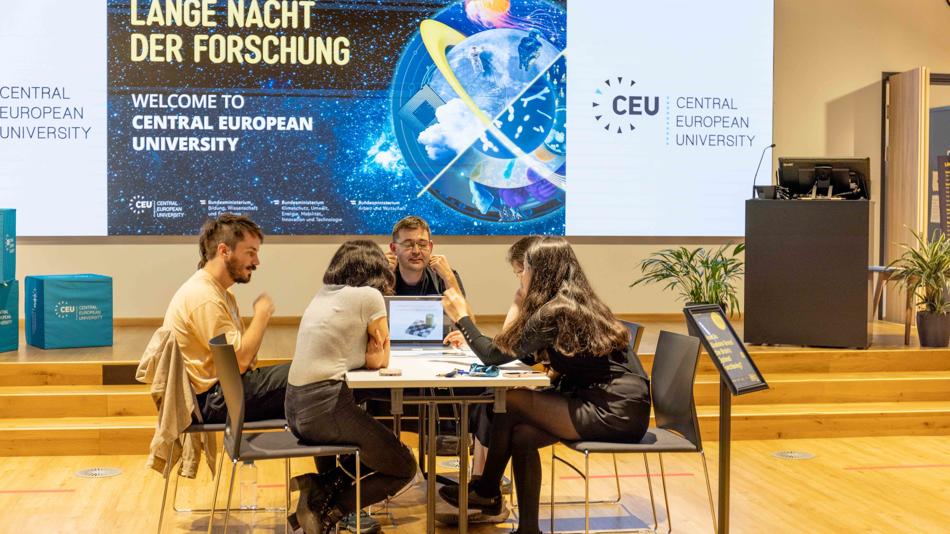
Most of the time, you don’t consciously think through what comes next-you just feel it. A melody resolves the way you expected, a familiar phrase practically completes itself, and when something breaks the pattern it stands out immediately. This demo is about the learning process behind that sense: statistical learning. Your brain continuously absorbs regularities from experience-what tends to go together, what tends to follow what-without you even noticing. We’ll briefly show how researchers study this in the lab: how we create controlled streams of sights and sounds, build in hidden structure, and use careful comparisons to figure out what the brain has picked up. The goal is to make an invisible everyday skill visible, and to show what counts as evidence when scientists say that “learning happened.”
Besucherinformation
Anfahrtsbeschreibung: Von der U1 Station Reumannplatz mit den Straßenbahnen 6 und 11 (Schrankenberggasse) direkt erreichbar. 5 Gehminuten von der D-Wagen Station Absberggasse.
Dieser Ausstellungsstandort ist barrierefrei zugänglich und verfügt über barrierefreie Toiletten.
Eine barrierefreie Toilette befindet sich im Erdgeschoss.
Öffnungszeiten
Sponsoren / Partner




17 weitere Stationen an diesem Standort
-
 VortragWarum sind manche Länder reich – und andere arm? Eine Einführung in die EntwicklungsökonomieThema: GesellschaftWas ist Entwicklungsökonomie – und warum sind manche Länder reich, während andere arm bleiben? In diesem interaktiven und unterhaltsamen Vortrag gehen wir den großen Fragen globaler Ungleichheit nach. Testen Sie Ihr Wissen, hinterfragen Sie gängige Annahmen und erfahren Sie, wie Ökonom:innen Entwicklung erforschen.Central European University19:00 - 20:00
 -
MitmachstationMethods to Study Infants’ CognitionThema: NaturwissenschaftenUnderstanding what babies know is challenging-they can’t answer questions or take tests. With eye tracking, we follow their gaze to see how they interpret the world and even predict outcomes. Visitors can try the eye tracker, watch animations, control a game with their eyes, and discover how these playful methods reveal early cognition.Central European University17:00 - 20:30
-
MitmachstationGames as Research ToolsThema: NaturwissenschaftenTo make young kids interested in the complex scientific questions we investigate, we have to translate them into games they enjoy. This makes research a rewarding experience for both children and adults. Try our gamified experiments and find out what we can learn from them about the developing mind!Central European University17:00 - 20:30
-
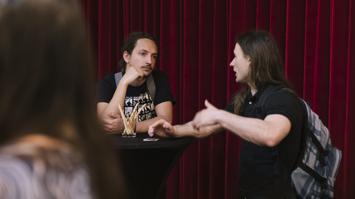 MitmachstationChange My Mind!Thema: GesellschaftConvinced you're right? Let's check — philosophy provides a useful toolset for uncovering the truth. At this station, you can tackle some of today's most pressing issues through open, honest dialogue with a philosopher. Our "Change My Mind" prompts are here to help you examine your views and see how well they hold up when we think them through together.Central European University17:00 - 18:30
 -
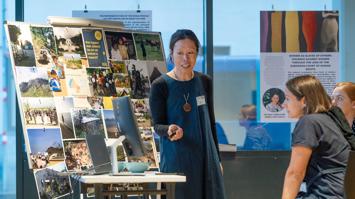 MitmachstationBeyond Surveys and Votes: Participatory Data Collection for Inclusive Policy DeliberationThema: GesellschaftThis workshop introduces participants to innovative, participatory methods of data collection that go beyond traditional surveys and interviews. These approaches emphasize co-creation, visual and experiential techniques, and collective sense-making, making them particularly suitable for deliberative decision- and policy-making processes. The workshop is in German and English languages.Central European University17:00 - 18:30
 -
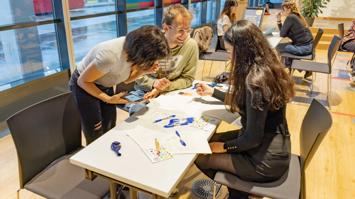 Experiment / VorführungExploring the Cognitive Science of Sensory IllusionsThema: NaturwissenschaftenDo you think you can trust your eyes and ears? Think again! In this interactive program, experience visual and auditory illusions that reveal how easily the brain is tricked. See colors that aren’t changing, hear sounds that aren’t there, and discover how your mind fills gaps without noticing as perception reconstructs reality.Central European University17:00 - 19:30
 -
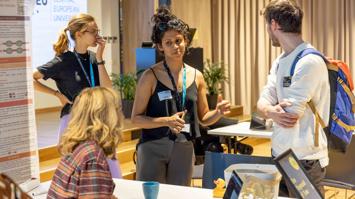 Experiment / VorführungIn the Wake of Fallacies: Rethinking RationalityThema: NaturwissenschaftenPsychology textbooks are full of examples where people seem to make obvious logical or mathematical mistakes. In this demo, we revisit these classic “fallacies” and explore how researchers study them. Discover how choices that look irrational may actually arise from a rational mind—and what this reveals about human decision-making.Central European University17:00 - 19:00
 -
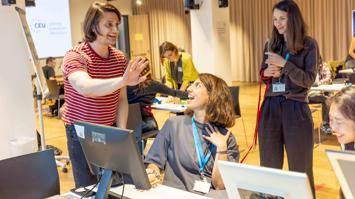 WorkshopObservational Games in Virtual RealityThema: NaturwissenschaftenHow do we sum up the visual environment around us? How do we “put together” what we see? How do we make conscious decisions based on information learned unconsciously—is it intuition or certainty? In small, gamified VR experiments, we explore these questions by presenting precisely controlled visual environments and systematically varying what people see to track how perception and decisions change.Central European University17:00 - 19:00
 -
 Experiment / VorführungResponsibility in Action and Communication: Experimental ApproachesNeuThema: Gesellschaft NaturwissenschaftenHow do we decide who is to blame when things go wrong? We present two sets of experimental studies on responsibility attribution: the first asks how people judge those whose actions caused harm even though they could not foresee the consequences; the second asks how people judge advisors who gave bad advice, and whether advisors use hedges such as "I think" or "maybe" to anticipate blame and deflect it.Central European University17:00 - 20:30
 -
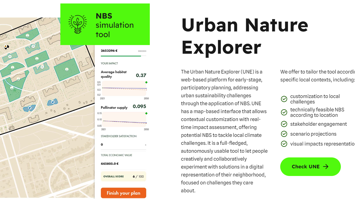 WorkshopGreen the City: Nature-Based Solutions for Urban ResilienceThema: UmweltJoin a one-hour interactive workshop to explore how nature can make Vienna more resilient to climate change. Learn about green roofs, trees, parks, and waterways, then experiment hands-on with the Urban Nature Explorer to see how adding nature to urban spaces can reduce heat, manage water, and create healthier neighborhoods.Central European University20:00 - 21:00
 -
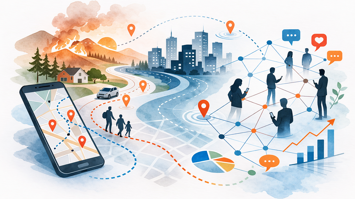 VortragHow Do Scientists Use Your Digital Footprints to Study Social Issues?Thema: DigitalisierungEvery call, location ping or post leaves a digital footprint—and these traces reveal more than habits. Mobile metadata helps track wildfire evacuations, identify vulnerable groups, and expose inequalities. Social media data maps how opinions spread, where polarization grows, and how communities engage or clash online. Join Elisa Omodei to explore how digital traces can shed light on social and political challenges.Central European University18:00 - 18:45
 -
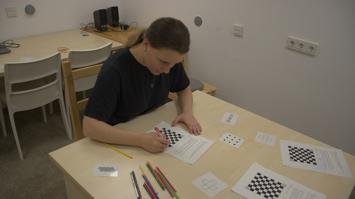 MitmachstationGemeinsames Problemlösen: Wie Hinweise Lösungen beeinflussenThema: NaturwissenschaftenNehmen Sie an einer interaktiven Aufgabe zum gemeinsamen Problemlösen teil, bei der Paare fünf „Thinking-outside-the-box“-Rätsel bearbeiten. Jeder Partner erhält einen Hinweis, der entweder mit dem des anderen übereinstimmt oder davon abweicht. So können wir untersuchen, wie sich komplementäre oder gleiche Hinweise auf die gemeinsame Lösungsfindung auswirken. Eine individuelle Version ist ebenfalls möglich.Central European University17:00 - 21:00
 -
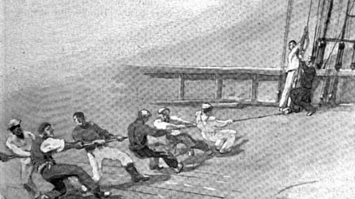 VortragWie können Arbeitslieder soziale Zusammenarbeit unterstützen?Thema: GesellschaftEin interaktiver Kurzvortrag über unsere Forschung zu Arbeitsliedern und anderen Vokalisierungen in der Gruppenkoordination. Die Präsentation zeigt, wie Rhythmus und Gesang gemeinsame Aktivitäten erleichtern können. Die Teilnehmenden lernen zudem ein oder zwei traditionelle Arbeitslieder kennen und probieren sie gemeinsam aus.Central European University17:30 - 18:00
 -
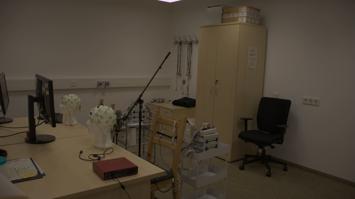 FührungThe Social Mind and Body Lab TourThema: NaturwissenschaftenJoin a guided tour of the Somby Lab facilities and explore how we study human behavior and cognition. Participants will visit the Music Lab, Motion Lab, and EEG Lab, discover the equipment we use, and gain insight into the research methods and environments where our studies take place.Central European University17:30 - 19:30
 -
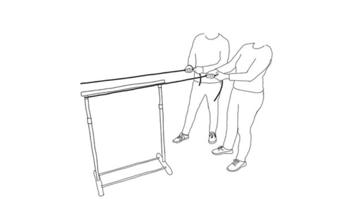 MitmachstationGemeinsames SeilziehenThema: GesellschaftAn dieser Mitmach-Station können Besucher:innen an einer vereinfachten Version unseres Experiments teilnehmen. Das Experiment untersucht, wie Vokalisierungen das Timing und die Koordination bei gemeinsamer Anstrengung unterstützen. Die Teilnehmenden können ausprobieren, wie ihre Stimmen dabei helfen, die aufgebrachten Kräfte mit einer Partnerperson aufeinander abzustimmen.Central European University18:00 - 21:00
 -
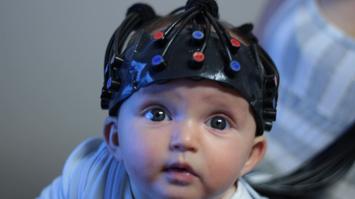 FührungHow to Study the Babies’ Mind and Their Exceptional Learning Abilities? A Guided Hands-On Tour of the KiKo Research CenterThema: NaturwissenschaftenBabies learn an impressive amount during the first years of life. But how can we find out what they know about the world and how their learning unfolds? On a guided tour of the KiKo Research Center, you will discover modern research methods to study babies, such as eye-tracking and neuroimaging, and try out experiments in a hands-on way.Central European University18:00 - 19:00
 -
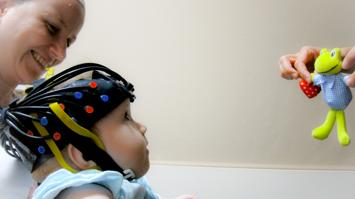 MitmachstationWie schlau sind Babys? Das KiKo-Quiz über Forschung zur kognitiven EntwicklungThema: NaturwissenschaftenBabys können schon mehr, als man denkt! Wie viel wissen Sie darüber, was in den Köpfen von kleinen Kindern vor sich geht? Machen Sie mit beim KinderKognitions-Quiz und lernen Sie mehr darüber, welchen Fragen wir im KiKo-Forschungszentrum auf der Spur sind. Kinder und Familien sind herzlich willkommen!Central European University17:00 - 20:30